What Does Indirect And Direct Light Mean?
What’s the difference between bright indirect light and other indoor light levels for tropical plants?
Finding the right light for your tropical while indoors can be tricky, but getting it right is one of the biggest factors in keeping tropical plants healthy. Most houseplants naturally grow underneath taller trees, where they receive gentle, filtered sunlight rather than harsh midday rays. Here’s what the different light levels mean inside your home:
Bright Indirect Light
This is the ideal light for most tropicals. The plant is placed near a window where the room is bright, but the leaves never sit in strong sunbeams. Think of a spot where the plant can “see the sky” but doesn’t get blasted by the sun. This level encourages steady growth, lush foliage, and prevents leaf burn.
Direct Sun
Direct sun happens when sunlight physically hits the leaves. Some plants like succulents, citrus, or cacti love it, but most tropical houseplants find it too intense. Leaves may fade, curl, or turn crispy if exposed for too long.
Medium Light
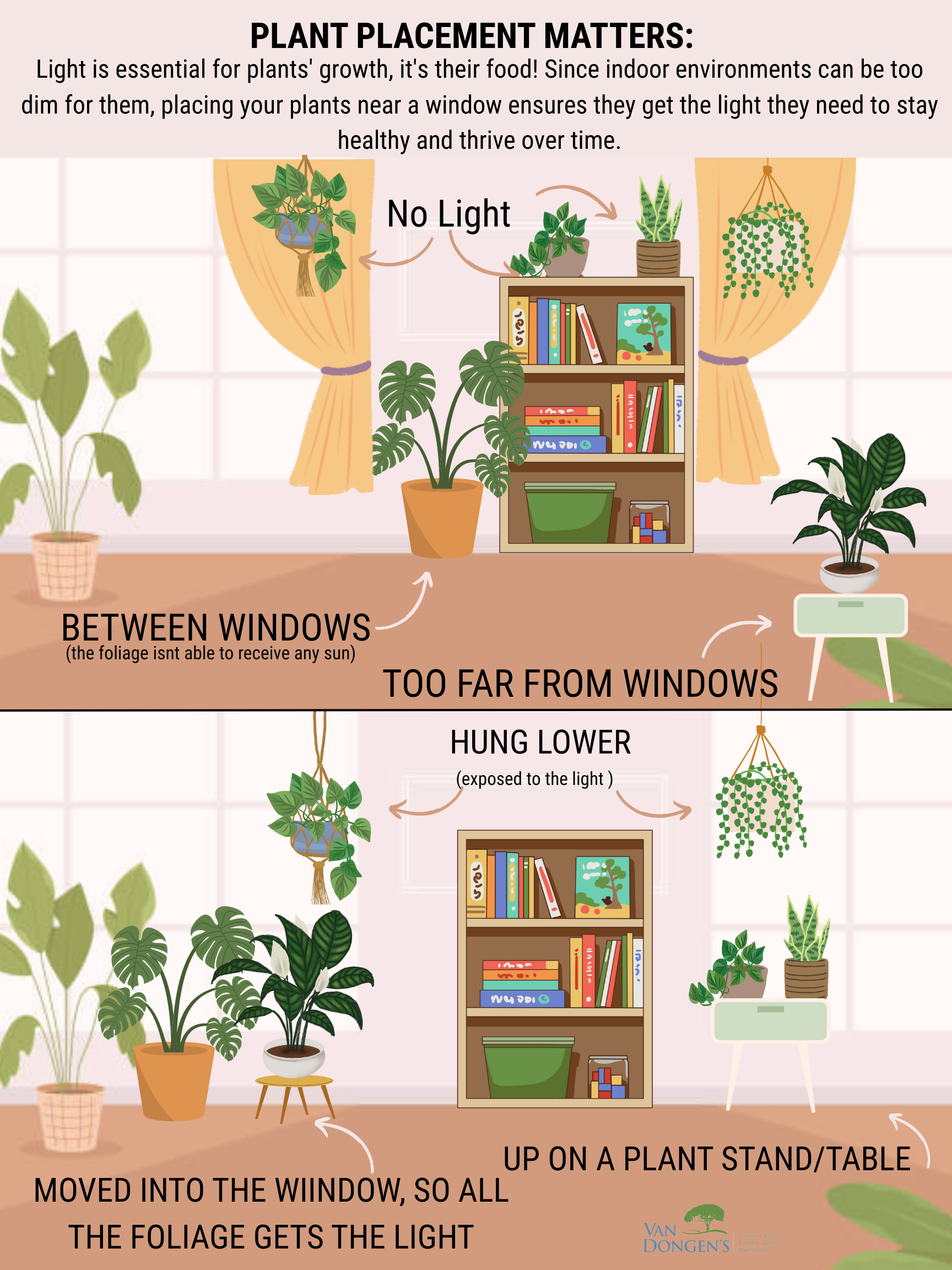
A bright room, but the plant is set far enough from the window that the intensity drops. Medium light is fine for hardy, adaptable plants like pothos or snake plants, but fussier tropicals may grow slowly or become leggy. This is common when plants are placed between windows or several feet back from the glass.
Low Light
Low light areas receive only faint, reflected light, no direct view of the sky. Corners, hallways, or rooms with small windows fall into this category. While some plants can tolerate low light, very few will actually thrive in it. Growth will be minimal, and foliage may gradually thin out.
Why placement matters:
Making small adjustments to where a plant sits in your home can completely transform how well it grows. Every plant has its own unique preferences when it comes to light, and understanding those needs is one of the most important parts of keeping them happy. A plant that looks tired or sluggish can often bounce back simply by being moved to a spot that suits it better. Please note that this is not always the cause. Sometimes the issue comes from watering habits or other environmental conditions, so it is always worth looking at the whole picture when a plant starts to struggle.
Little shifts can make a big difference. Try moving a plant from between two windows to directly in front of one, lowering it from a high shelf so it is closer to the glass, or lifting it off the floor onto a stand so more of its leaves receive light. Some plants show improvement within a few days, while others take a few months to settle and respond. It all depends on the plant, the conditions and how much extra light it gains from the move.